
The thing nobody says out loud
Shame doesn't feel like shame when you're in it. It feels like laziness. It feels like your body doesn't want this, or like you're broken for wanting it at all. It feels like the thing that killed your pleasure was your own faulty wiring when actually it was a voice in your head that learned to talk before you learned to say no.
I work with people every week who have gorgeous sexual desire trapped behind a wall of guilt they didn't even build themselves. The guilt arrived pre-installed. A parent's comment. A religion. A partner's preference. A culture that rewarded you for being small and quiet.
And here's what I've learned: pleasure is a muscle that atrophies when you don't use it. But it's also a muscle that responds to permission.
Why shame short-circuits arousal
This is neurology, not morality. Your nervous system has a fundamental job: keep you safe. Shame signals danger. It says: this thing you want is wrong, bad, risky. And your body listens.
When shame is present, your sympathetic nervous system (the fight-or-flight branch) stays partially activated. Blood doesn't pool the way it needs to for arousal. Your clitoris doesn't engorge. Your brain stays focused on threat instead of sensation. You're not broken. You're protected. Your body is doing exactly what it thinks you need.
The problem is: you deserve pleasure more than you deserve that false protection.
How lemon vibrators interrupt the shame cycle
A good lemon clitoral vibrator does something specific: it gives you sensation so reliable, so external, so undeniable that it bypasses the voice that says you shouldn't want this.
Here's why that matters. When you're using your own hand or when pleasure is dependent on your partner, there's still room for guilt to whisper. "Am I taking too long? Is this selfish? Should I be enjoying this?" The voice has space to work.
But when you're holding a lemon vibrator, when the stimulation is consistent and comes from outside your body, something shifts. The sensation becomes too loud to ignore. Your nervous system gets evidence: this feels good. This is safe. This is allowed.
That's not magic. That's desensitization. You're training your brain that pleasure is not a threat.
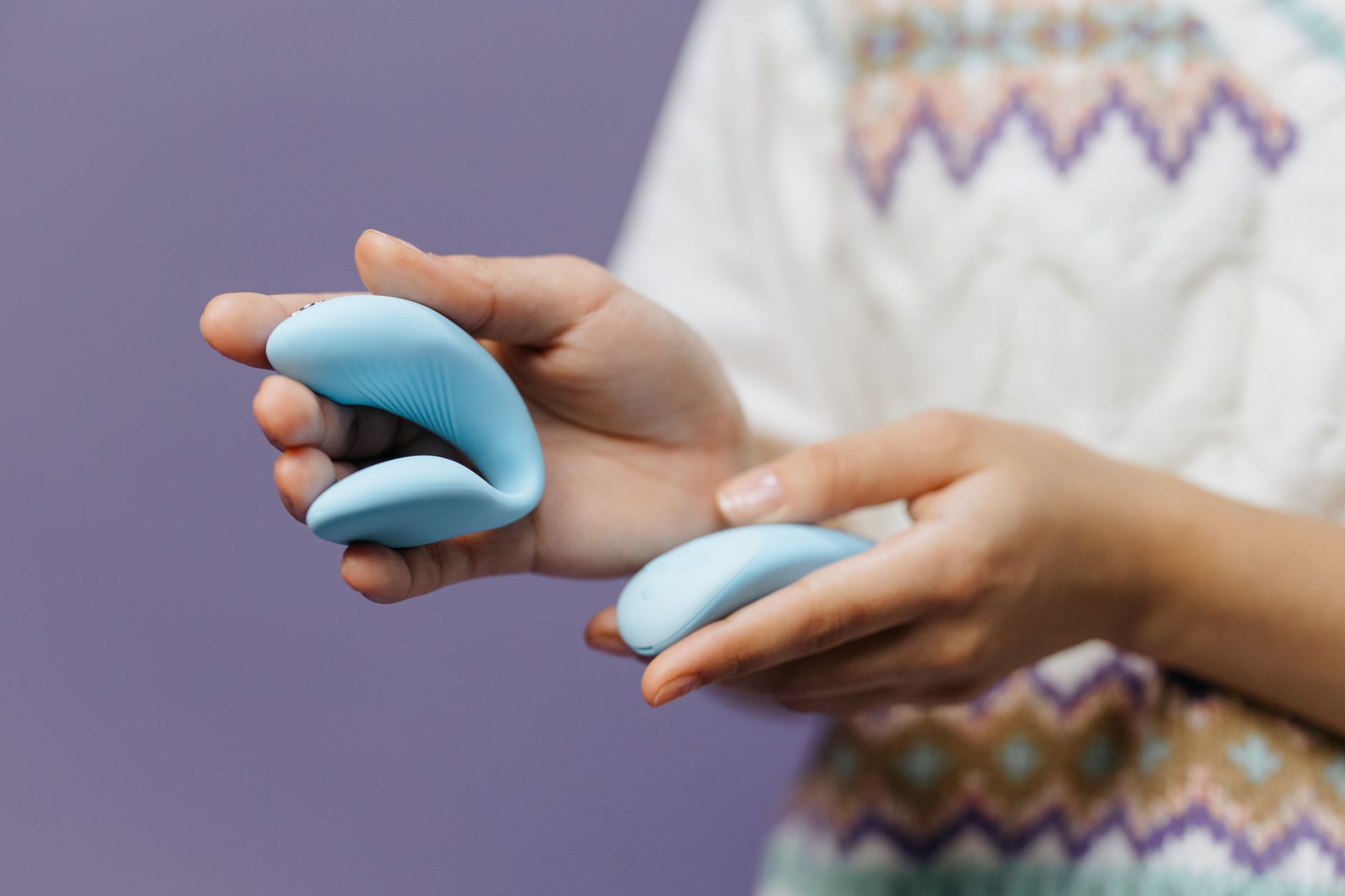
Photo by cottonbro studio on Pexels
The permission piece (this is the real work)
Using a lemon vibrator isn't actually about the vibrator. It's about using the vibrator as a way to give yourself permission.
Start small with this. Set aside 20 minutes. Not because anything has to happen, but because you're telling your nervous system: this time is for you, and that's allowed.
Then touch the vibrator to yourself. You don't even have to turn it on yet. Notice: does guilt show up? Where in your body do you feel it? The chest? The throat? The stomach?
This is crucial: when guilt shows up, don't try to push through it. Instead, pause and ask yourself: whose voice is that? Your mother's? A partner's? A church's? A friend group's? Name it. Literally say it out loud. "That's my ex's voice. That's not me."
Then turn on the vibrator and focus on pure sensation. Not performance. Not outcome. Just: what does this actually feel like? What speed? What angle? What thought runs through your head when you feel genuinely good?
Building sensation literacy
People shame-blocked around pleasure often have what I call low sensation literacy. They know pleasure exists in theory, but they've never actually developed a map of what their body wants.
A lemon vibrator helps you build that map. Over a few weeks of using it, you start to know: I like slower, circular patterns. I like building intensity gradually. I like combining external stimulation with thoughts about X. I don't like speed for its own sake. I need mental space, not performance.
That literacy is your actual power. Once you know your body's language, shame has less hold. You're not trying to want something you're supposed to want. You know what you actually want.
What to expect in weeks one through four
Week one: You might feel nothing but anxiety. That's okay. Anxiety is often just excitement your nervous system doesn't trust yet. Keep showing up.
Week two: A brief moment of sensation, maybe pleasure, then guilt floods in hard. This is your nervous system testing: is this really safe? Respond by going slower next time, or stopping and coming back later. You're not failing.
Week three: Pleasure might hit, and you'll feel shocked. Sometimes people cry. That's your nervous system releasing years of held tension.
Week four: You start to understand. You start to want it for yourself, not for some imagined approval.
The role of lemon sexual toys specifically
Why a lemon clitoral vibrator rather than some other kind of stimulation? A few reasons.
The suction mechanism feels profoundly different from vibration. It's gentler in some ways, more direct in others. For people who've built intense shame around "too much" sensation, the lemon vibrator's specific quality of stimulation often feels less triggering. It's not aggressive. It's not frantic. It feels like permission.
Second, there's something about choosing an actual device, buying it, bringing it into your space that is a concrete act of permission. It's harder to deny that you're choosing this when it's sitting on your nightstand.
Third, the reliability matters. With a partner or your hand, there's variability. Some sessions feel better than others. With a lemon vibrator, the sensation is consistent. Your brain learns: this works. I can trust this.
When to talk to a partner (and when not to)
If you have a partner and you're working through shame-based pleasure blocks, the smartest move is often to do some of this work alone first. Let your body trust pleasure in private before you try to integrate a partner.
Once you've rebuilt sensation literacy, then the conversation becomes easier. You're not asking permission anymore. You're telling them what you discovered: "I found out I actually like this. I want to explore it together."
If your partner responds with shame or resistance, that's information. You might need support from a therapist to figure out what that means for your relationship.
The guilt spiral and how to exit it
Most people using a lemon vibrator while carrying shame will hit a point where guilt comes back hard. You've had good sessions, and then suddenly you feel like you're doing something wrong.
Here's what's usually happening: you're approaching the edge of real pleasure, and your nervous system is panicking. It doesn't have a story for you being this selfish, this sexual, this alive. So it sounds the alarm.
The answer isn't to white-knuckle through it. The answer is to pause, name it, and then make a small choice: "I'm going to try this one more time, differently."
Maybe that means using the vibrator with your clothes on. Maybe it means setting a timer for five minutes instead of twenty. Maybe it means using it while thinking about something emotionally safe rather than erotically thrilling. The point is: you're showing your nervous system that pleasure doesn't have to look like anything specific to be real.
Reading your body's signals
Sometimes when you use lemon clitoral vibrators, especially early on, you might feel numbness instead of pleasure. That's your nervous system still in protection mode.
Don't panic. Keep going. Sensation will return. It's like returning to exercise after a long break. Your body needs time to remember how to respond.
Other times you might feel intense pleasure but no orgasm. That's enough. Pleasure is the point, not the outcome. When you stop chasing orgasm, orgasm often shows up anyway.
A word about speed and intensity
Here's something most advice gets wrong: if you're shame-blocked, starting at high intensity is a mistake. Your nervous system will interpret that as unsafe and shut down harder.
Start at pattern one. Stay there for several sessions. Let your body adjust to the idea that pleasure is allowed. Only then move toward faster, more intense settings. You're not weak for needing this approach. You're smart about your own nervous system.
The long view
Reclaiming pleasure when shame is in the way isn't a weekend project. It's a practice. But here's what I see happen over weeks and months: people stop needing the vibrator to feel permission. They start using it because they want to, because it feels good, not because they're fighting something.
That shift is everything. That's when you know shame has lost its grip.
Using a lemon vibrator isn't about fixing yourself. You're not broken. You're remembering that your pleasure is legitimate, that your body is yours, and that wanting good feelings is not a character flaw. It's the most human thing there is.
People Also Ask
Is it normal to feel guilty while using a clitoral vibrator?
Completely. Guilt during pleasure is one of the most common experiences I hear about, especially from people who grew up with messages that masturbation or self-pleasure was wrong. That guilt is not a sign you should stop. It's a sign your nervous system is still learning that this is safe. Keep going gently. The guilt will quiet down over time as your body gets evidence that pleasure is not dangerous.
How long does it take to stop feeling ashamed of wanting pleasure?
There's no single timeline, but most people notice a shift within four to six weeks of consistent gentle exploration. Some take longer. The key is that you're not trying to force the feeling away. You're slowly building new neural pathways that say: pleasure is okay for me. That rewiring happens gradually, not overnight. If you're stuck after eight weeks, talking to a therapist who specializes in sexual health can help.
Should I tell my partner I'm using a lemon vibrator if I feel ashamed about it?
Not necessarily right away. First, you need to give yourself permission without anyone else's approval or judgment. Once you've done some solo work and feel more grounded in your own desire, then you can decide whether to involve your partner. Some people find that their shame decreases faster when they're not managing a partner's reaction at the same time. Shame thrives in secrecy, but it also thrives when we're performing for others. Solo time gives you space to just be with yourself.
What if I try a lemon vibrator and feel nothing at all?
Numbness during early exploration is often a sign that shame is still very active in your nervous system. It's a protective mechanism. Don't interpret it as "I'm broken" or "this won't work for me." Instead, treat it as data: your body is taking time to trust. Try again in a few days. Maybe use it with your eyes closed and focus on sound instead of sensation. Maybe use it over clothing. The point is to slowly convince your nervous system that this is safe. Sensation will return.
Can a lemon clitoral vibrator help if my shame is tied to religious beliefs?
Yes, though you might need some additional support. Religious shame about sexuality is deep and often interwoven with identity and belonging. A lemon vibrator can help you experience pleasure directly, which sometimes creates space between the shame message and your actual experience. But if that shame is connected to your community or your faith, you might also benefit from talking to a therapist or counselor who understands religious trauma and can help you untangle what you actually believe from what you were taught to believe. Pleasure and faith aren't always in conflict, but sometimes the stories we carry make it feel that way.
Is it selfish to prioritize my own pleasure using a lemon vibrator?
No. Self-knowledge and self-care are the opposite of selfish. When you understand your own body and what brings you pleasure, you're better equipped to communicate with partners, to ask for what you need, and to feel more alive in your relationships. Shame wants you to believe that thinking about your own pleasure is selfish. It's not. It's foundational. You can't give what you don't have. Reclaiming your pleasure makes you a better partner, not a worse one.
Sources
This article draws on evidence-based approaches from relationship therapy, sex-positive psychology, and polyvagal theory regarding nervous system states and safety. For deeper reading, consult resources from the American Association of Sexuality Educators, Counselors and Therapists (AASECT), and trauma-informed sex therapist training materials.
If you're working through deep shame around pleasure, consider reaching out to a licensed therapist who specializes in sexual health. You deserve support that's tailored to your specific story. Contact us if you'd like guidance on finding the right professional in your area.