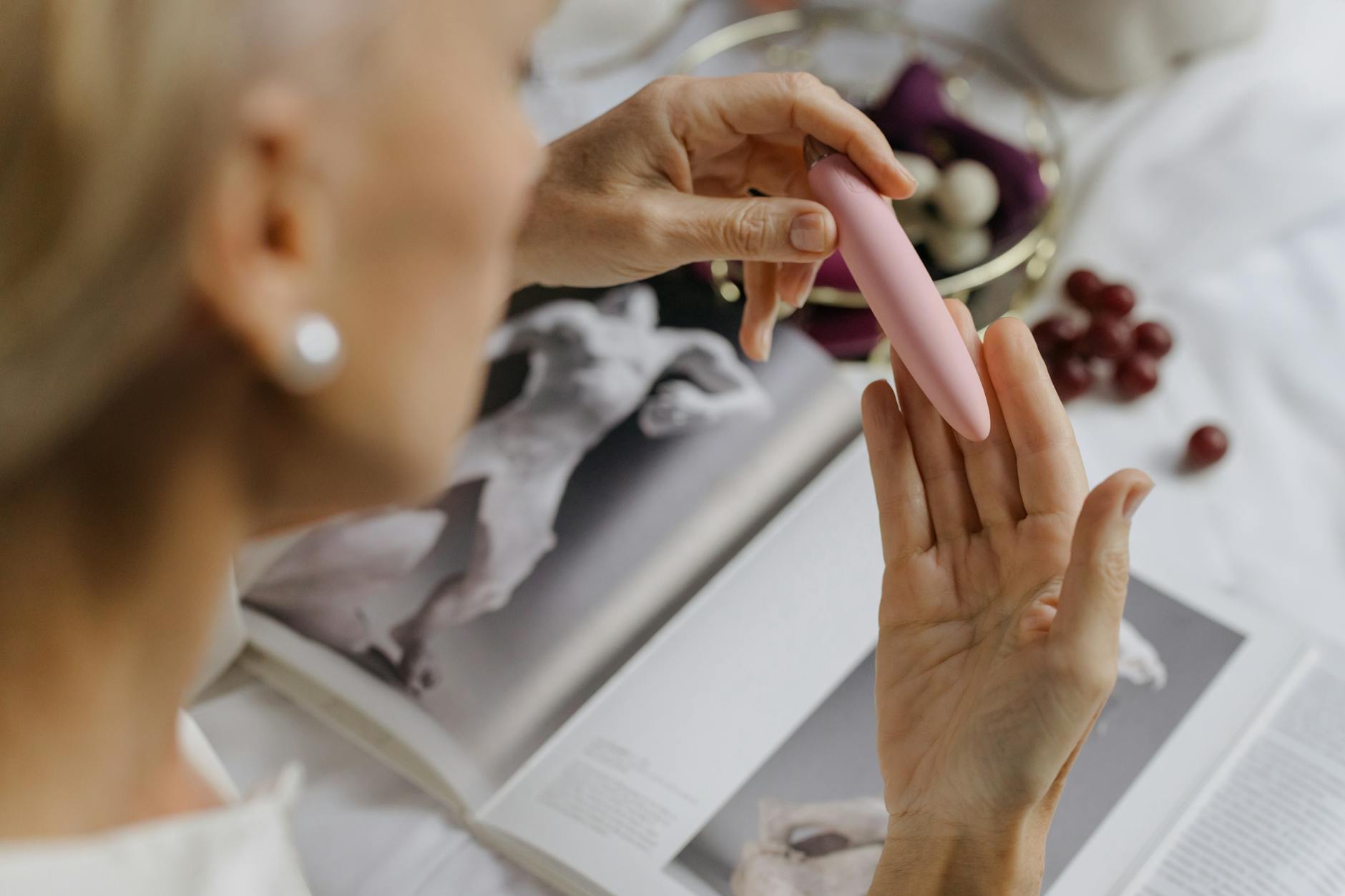
Let's be real: rebuilding pleasure after trauma is not linear, and it's not quick. Your nervous system learned to protect you by shutting down sensation. Reversing that takes time, intention, and tools that let you move at your own pace. Lemon clitoral vibrators can be part of that process, but only if you understand why sensation feels foreign and how to introduce it back into your body gradually.
This is not a guide to "getting over it." It's a guide to reconnecting.
Why trauma disconnects you from pleasure
Trauma doesn't just affect your mind. It rewires your nervous system. Your body learned that sensation could be dangerous, so it developed a protective numbness. Touch that should feel good might trigger hypervigilance. Pleasure might feel wrong. You might dissociate during moments that are supposed to be intimate.
This is your nervous system doing its job. It kept you safe. But safety and pleasure are different things, and your body doesn't always know how to have both at once.
That's why vibrators designed for clitoral stimulation can actually help. When used mindfully, lemon vibrators give you back control. You choose the intensity. You choose when to stop. You choose whether to keep going. That autonomy is the foundation of rebuilding pleasure.
The neuroscience of rewiring sensation
Your brain contains something called the insula. It processes bodily sensation and sends signals about what's safe and what's dangerous. Trauma teaches the insula to flag pleasure as a threat. Rebuilding means slowly teaching it otherwise.
Repetition matters. Every time you experience pleasure without triggering, you're laying down a new neural pathway. It's not magic. It's neuroscience. And it takes patience. Studies on nervous system regulation show that repeated, safe experiences of positive sensation can gradually shift how your body responds to touch. This is why gradual exposure, done on your terms, works.
Lemon vibrators are especially useful here because they isolate sensation to one area. You're not managing penetration, partner pressure, or competing sensations. Just steady, predictable stimulation that you control entirely.
Starting small: the first introduction
If you're rebuilding pleasure after trauma, the first rule is that you don't have to use a vibrator at all. Seriously. Solo touch, temperature play, or just breathing exercises might be the right starting point for months. There's no timeline.
When you do decide to try, here's how:
1. Start without turning it on. Hold a lemon vibrator. Feel the weight, the texture, the shape. Let your brain register that this is an object, not a threat. This step sounds basic and it feels silly, but it matters.
2. Turn it on, but don't use it yet. Listen to the vibration. Feel it in your hand. Get used to the sound and sensation without it touching your body.
3. Start on a non-sexual area. Your forearm, your wrist, your thigh. Somewhere that carries no emotional charge. Let your nervous system learn that this vibration is just vibration.
4. Move to the clitoral area only when you're ready. And ready means: you're breathing normally, you're not dissociating, and you want to continue. Not because you think you should. Because you actually do.
Using lemon vibrators when dissociation happens
Dissociation is common when rebuilding pleasure. You might feel like you're watching yourself from outside your body, or you might just go numb mid-session. If this happens, stop. Not as punishment. Not as failure. Just stop.
Here's what helps: grounding. Before you use a vibrator, anchor yourself. Feel your feet on the floor. Name three things you can see. Feel the fabric of your clothes. Then, if you want to continue, you can. And you can stop again whenever you need to.
Some people find it helpful to use lemon vibrators with grounding statements: "I'm safe. I'm in control. I can stop anytime." This isn't woo. It's your nervous system learning that pleasure and safety can coexist.
The pacing that actually works
Therapists who work with trauma survivors often recommend what's called "titration." That's just a fancy word for small doses, spaced out, with recovery time in between.
If you're new to this, a session might look like: five minutes with the vibrator on low, once or twice a week. Not every day. Your nervous system needs time to process and integrate. Pushing harder doesn't mean healing faster. It means re-traumatizing yourself, and that sets everything back.
As your body becomes more comfortable, you might increase frequency or intensity. But slowly. You're not racing to orgasm. You're teaching your nervous system that pleasure is safe.
What to do about orgasm pressure
Here's the thing nobody tells you: when you're rebuilding pleasure after trauma, orgasm is not the goal. Sensation is the goal. Presence is the goal. Connection to your own body is the goal.
If orgasm happens, great. If it doesn't, that's also fine. In fact, if you focus on orgasm, you activate the same goal-oriented, performance-based mindset that trauma often feeds. Instead, notice what you can feel. Notice where there's sensation. Notice where you're still numb. That's the real information.
When you eventually work with lemon vibrators or other tools designed for clitoral pleasure, the goal is exploration, not achievement. If you find yourself tensing up, gripping, or thinking "come on, just come," that's a sign to slow down.
Building a ritual that feels safe
Trauma survivors often do better with ritual. Predictability helps. So consider building a practice around using a vibrator, not just the vibrator itself.
That might mean: light a candle (not for romance, for sensory focus), set a timer so you know when to stop, make sure you're alone and won't be interrupted, maybe play music that makes you feel calm. Some people shower or bathe first. Some people do a body scan, noticing where they hold tension. The ritual is about saying to your nervous system: "I'm taking care of myself. This is safe."
It's also about permission. Trauma teaches you that your pleasure doesn't matter. That your body isn't yours. Building a deliberate ritual says the opposite. It says: I'm worth this time. My pleasure matters.
When to work with a therapist alongside this
Using lemon vibrators or any sexual tool is not therapy. It's a tool. Real healing from trauma typically requires actual therapy. EMDR, CPT, or somatic experiencing have strong research backing. If you're rebuilding pleasure, you likely need both: professional support for the trauma, and personal practices (including tools like vibrators) for reconnection.
Talk to a trauma-informed therapist before starting. They can help you understand your specific triggers and create a plan that fits your nervous system. Some therapists will actually recommend vibrators as part of a broader rewiring process. Others will suggest waiting. Both might be right.
Red flags that mean pause
If using any vibrator, including a lemon clitoral vibrator, triggers panic, flashbacks, or intense dissociation, stop. Not eventually. Right then. Your nervous system is telling you something. Honor that.
Similarly, if you notice yourself using a vibrator to avoid difficult emotions or to numb yourself further, that's a different kind of problem. Rebuilding pleasure means feeling more, not less. If you're using it to escape, it's become another trauma response, not a tool for healing.
Other red flags: pain where there wasn't pain before, numbness that gets worse instead of better, or a sense that you're re-traumatizing yourself in the process. These all mean: stop and get professional support.
The long view
Rebuilding pleasure after trauma is slow, but it's real. Your nervous system can rewire. Your body can learn that sensation is safe. Your brain can develop new pathways to pleasure.
Lemon vibrators, when used mindfully, can support that process. They give you control, predictability, and isolated sensation. But they're only part of the picture. The real work is in your nervous system's willingness to trust again. And that takes time, patience, and usually professional support.
You deserve to feel good in your body again. Not because anyone else thinks you should. But because you do.
People also ask
Can I use a vibrator if I'm still in trauma therapy?
Yes, but talk to your therapist first. A trauma-informed therapist can help you understand whether now is the right time, and if so, how to use a vibrator safely as part of your recovery. Some therapists recommend waiting until you have some stability. Others integrate it into the healing process. Either way, professional guidance matters.
What if I feel guilty using a vibrator because of my trauma?
Guilt is a common trauma response. Your nervous system might be saying "this is selfish" or "I don't deserve this" or "this is wrong." That's the trauma talking, not the truth. Your pleasure matters. Using lemon vibrators, or any tool that helps you reconnect with your body, is an act of self-care and reclamation. It's not selfish. It's necessary.
How long does it take to rebuild pleasure after trauma?
It varies wildly. Some people feel shifts in weeks. Others take years. There's no standard timeline because trauma affects everyone differently. What matters is that you're moving in the direction of more sensation, more presence, more agency. Not how fast that happens.
Should I use a partner during this process or go solo?
Solo first. When you're rebuilding pleasure, you need to understand what feels good without managing another person's feelings or expectations. Once you've built some confidence and presence on your own, a partner can be part of the process. But they need to understand what you're doing and why. Communication is everything.
What if orgasm feels wrong or triggers me?
That's real, and it's common. Your body might associate orgasm with the trauma itself. If that's happening, work with a therapist before pushing yourself toward orgasm. Focus instead on sensation without the goal. Sometimes, as your nervous system heals, the association loosens. Sometimes it doesn't, and that's okay. Pleasure doesn't require orgasm.
Are lemon vibrators actually better for trauma recovery than other toys?
Not inherently. What matters is that you have a tool you can control, at an intensity you choose, focused on one area so you're not managing too many sensations at once. Some people prefer lemon clitoral vibrators. Others prefer wands or other styles. The best tool is the one that feels safe and under your control.
If you're navigating this journey and want support, reach out. You don't have to figure this out alone.